
Quick Answer
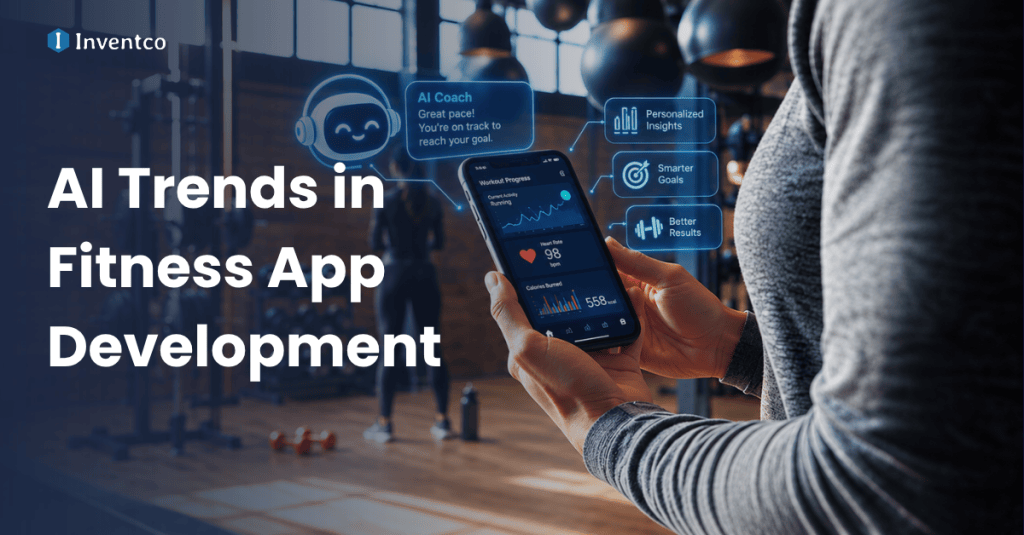
The key AI trends in the development of fitness apps in 2026 include hyper-personalized workout and nutrition plans, form correction in real time based on computer vision, greater integration with wearables and IoT, analytics for injury prevention and retention, voice-based AI coaching, AI with augmented and virtual reality, and local AI that preserves user privacy. All of the trends mentioned above collectively help turn the fitness apps into intelligent coaching systems responding to data received from each particular user in real time.
It is no longer about battling with competitors for the best workout library in the fitness sector. In 2026, apps that can create a sense of individualization in users will catch their attention, and this is happening as a result of the emergence of new trends in fitness app development that go much further than tracking steps and calories burned. It is equally important to realize which trends will be worthy of investment, both for the owner of a gym, fitness trainer, or entrepreneur.
The global fitness apps market size was valued at USD 12.1 billion in 2025 and is projected to grow from USD 13.9 billion in 2026 to USD 33.6 billion by 2033, at a CAGR of 13.4% from 2026 to 2033. The market in North America dominated with a revenue share of 39.8% in 2025. This growth is driven by increasing health awareness, technological advancements, the impact of the COVID-19 pandemic, and favorable economic factors, including rising disposable income and lower healthcare costs.
This article examines the AI developments that will shape fitness app development in 2026, what they mean for cost and timeline, and where the real obstacles remain, all as part of the larger decisions required in fitness app development, from platform selection to backend design.
Key Takeaways
- AI-powered hyper-personalization is no longer a luxury feature for fitness apps developed in 2026, but rather the standard.
- Users can get real-time feedback on their exercise technique without a trainer present thanks to computer vision and augmented reality-based form correction.
- AI models may now use heart rate, sleep, and recovery data rather than just exercise logs thanks to deeper wearable and IoT connection.
- Fitness applications are shifting from monitoring past events to identifying injury or churn risk before it occurs thanks to predictive analytics.
- For privacy-sensitive functions like form correction and health notifications, on-device AI processing is quickly becoming the norm.
Why AI Is Reshaping Fitness App Development in 2026?
Fitness apps collect vast amounts of user data, including workouts, heart rate, sleep, nutrition diaries, and, increasingly, camera and motion data from a phone or wearable. AI transforms raw data into something beneficial for the specific user, rather than a generic strategy designed for a “average” user who does not exist.
The numbers reveal that the payment has occurred. AI-enabled fitness applications have been demonstrated to increase engagement by 30 to 40 percent and retention by up to 25% when compared to regular apps. This is directly related to the broader function of AI in fitness app development, as personalization has progressed from a nice-to-have to a key product differentiator.
Top AI Trends in Fitness App Development
These are the trends showing up most consistently in new fitness app builds and major product updates right now.
1. Hyper-Personalized Workouts and Nutrition Plans
AI-powered models are designing exercise and nutritional plans based on the user’s fitness levels, personal goals, and past performance, adjusting from session to session depending on the results of the training, instead of simply moving from one pre-defined plan to another after some time. The same goes for the nutritional plans many development teams consider an app for diet and nutrition as part of the same AI-based model.
2. Real-Time Form Correction with Computer Vision
Using a phone camera or an AR overlay, computer vision models can flag incorrect squat depth, poor posture, or unsafe range of motion in real time, essentially replicating what a trainer would catch in person. Voice-based coaching often pairs with this, giving users spoken cues mid-set instead of a written summary afterward.
3. Deeper Wearable and IoT Integration
AI fitness features are only as good as the data feeding them, and increasingly that data comes from wearables rather than manual logging. Heart rate variability, sleep quality, and recovery scores from smartwatches and rings let an AI model recommend rest days or adjust workout intensity automatically. Making that connection reliable is a core part of wearable app development, since device APIs and data formats vary widely across manufacturers.
4. Predictive Analytics for Injury Prevention and Retention
Rather than tracking an exercise after it occurs, predictive algorithms examine trends in weeks of training data to identify overtraining, atypical fatigue patterns, or an increasing injury risk before it becomes a setback. The same strategy flags users whose activity is declining, providing a brand an opportunity to intervene before they cancel or remove the app.
5. Voice-Enabled AI Coaching
Conversational AI coaching, in which a user can ask a question in natural language and receive a particular, contextual response, has transitioned from novelty to expected functionality. It is also obvious in mindfulness-based products, such as yoga apps, which can employ guided speech prompts and change session length based on how a user says they feel rather than relying on screen tapping.
6. AI Paired with AR and VR
AI is also the engine behind the more immersive end of fitness technology, handling motion tracking, rep counting, and adaptive difficulty inside virtual environments. The practical side of AR and VR in fitness apps depends heavily on that AI layer working smoothly, since a laggy or inaccurate tracking model quickly breaks the sense of immersion.
7. On-Device AI for Privacy and Speed
AI Models running directly on the user’s phone instead of transferring each and every video frame or heart rate data to a server are fast emerging as a popular way to do things when it comes to features that require more privacy. There is no network latency involved, which makes a difference in real-time form correction where a delay is counterproductive.
Read More: How Much Does It Cost to Develop a Fitness App?
Challenges to Consider Before Adding AI Features
Data Quality and Bias
AI recommendations are only as reliable as the data behind them. Wearable sensors can misread heart rate during certain movements, users log workouts inconsistently, and training datasets for computer vision models have historically underrepresented body types, ages, and ability levels outside a narrow “average” range. Left unaddressed, this can produce confident-sounding recommendations that are quietly wrong for a meaningful share of users.
Privacy and Regulatory Compliance
Fitness apps that gather location, health metrics, or biometric data have genuine privacy obligations, and as AI features advance, so does this requirement. Encryption, transparent permission processes, and an honest response regarding the data’s destination are no longer optional extras. Apps positioning themselves for corporate wellness or healthcare-related collaborations, where compliance requirements are more stringent, should pay much more attention to this.
How to Choose the Right Fitness App Development Company?
Every team capable of developing a mobile application cannot produce a reliable AI feature set. When evaluating a fitness app development business, instead of asking about AI in general, focus on their experience with the topic that is most relevant to your application, such as computer vision, wearable integration, or recommendation engines. Instead of describing AI as a single feature category, a team that has already implemented these capabilities will explore data requirements and model limitations in detail.
Conclusion
AI trends in fitness app development are moving fast, but the apps winning user trust in 2026 are not necessarily the ones with the most features. They are the ones that use personalization, computer vision, and wearable data to solve a real problem: keeping people engaged past the first month. Prioritize the trends that fit your specific audience and budget, get a clear-eyed view of what each one costs to build well, and choose a development partner who can speak to the specifics rather than the buzzwords.
Frequently Asked Questions
Q1. What are the biggest AI trends in fitness apps in 2026?
Ans. The trends with the most traction are hyper-personalized workout and nutrition plans, real-time form correction using computer vision, deeper wearable and IoT integration, predictive analytics for injury prevention and retention, and voice-enabled AI coaching.
Q2. Does adding AI increase fitness app development cost?
Ans. Yes. A basic app typically costs $15,000 to $25,000, a medium-complexity app with wearable integration and adaptive plans runs $25,000 to $50,000, and an advanced app with computer vision and predictive analytics can reach $50,000 to $100,000 or more.
Q3. How do wearables work with AI fitness apps?
Ans. Wearables feed continuous data, such as heart rate, sleep, and recovery scores, into the app’s AI models, which use that data to adjust workout intensity, flag overtraining, or recommend rest days automatically instead of relying on manual input.
Q4. Is AI accurate enough to trust for fitness coaching?
Ans. AI coaching is reliable for general guidance, pattern recognition, and personalization, but it works best as a layer on top of sound training principles rather than a full replacement for professional guidance, especially for users managing an injury or a medical condition.


Leave a comment